
Heavy equipment marketplace
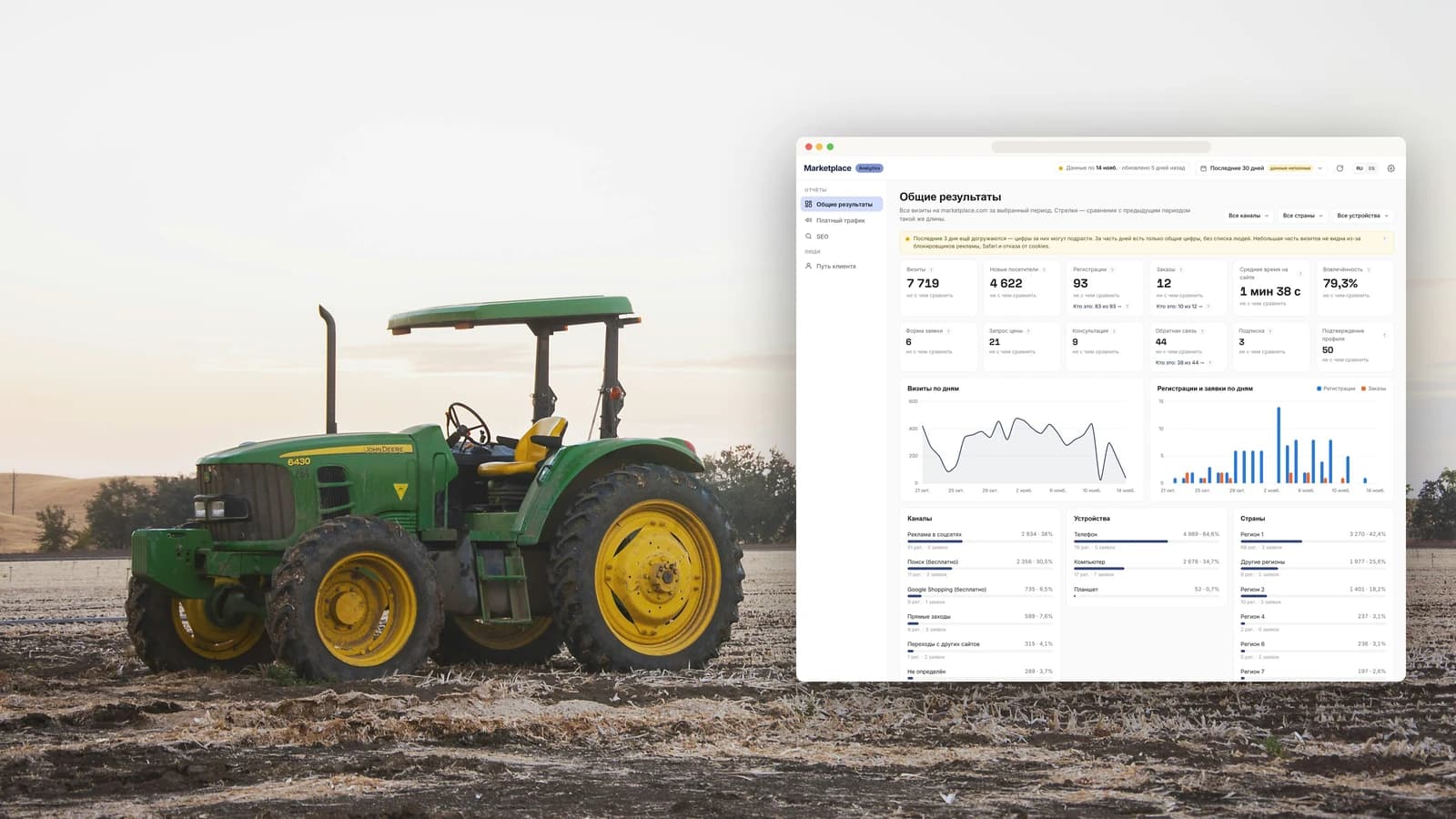
Meta and Google ads in four markets and end-to-end analytics for an international equipment marketplace: 3M+ impressions, 62,000+ visits, BigQuery and custom dashboards down to each buyer.
- Year
- 2026
Results at a glance
About the project
An international B2B marketplace for used farm and construction equipment from the US. Thousands of listings: tractors, combines, sprayers, excavators, loaders. Buyers are in several countries on different continents, and a single machine costs tens or hundreds of thousands of dollars.
Deals take time: weeks and several steps pass between the first visit and payment. So ads have to bring people who will reach an inquiry, not just clicks, and analytics has to see that whole path.
The company name and financials are under NDA.
The challenge
- Launch ads in new markets on Meta and Google: a catalog of thousands of items, several languages, an expensive product with a long deal cycle.
- Build analytics you can trust. Before the start, site events were only partly tracked: some key actions weren't tracked by any system, and Metrica had only automatic goals.
- See every buyer from the first ad click to the inquiry and the deal, not just channel totals.
What I did
1. Audit and strategy
- Analysed visitor behaviour from raw Metrica data: rebuilt sessions, found where people leave and what they look for. Filtered out team traffic, bots and test domains, which had inflated the numbers by almost 20%.
- Media plans for Google and Meta by market and launch stage.
- Keyword research by market: keywords and negatives for the key markets for Demand Gen, Shopping and Search.
2. Google Ads
Launched campaigns in four markets. Five campaign types for different jobs:
- Shopping on the product feed: specific machines with a price right in the results;
- Demand Gen: demand among farmers and contractors who aren't searching yet;
- Performance Max, Search on high-intent queries and retargeting to people who viewed listings.
In the first two months: 936,000+ impressions, 15,700+ clicks, 2,300+ equipment listing views.
3. Meta ads
- Catalog ads on the product feed. For the key market, a separate catalog in the local language exactly as the site serves it.
- A separate ad set for each equipment category: tractors, combines, sprayers, mowers. That shows which category brings people and keeps the budget from going into one.
- Geography around farming hubs: dozens of zones across agricultural regions instead of the whole country.
- Optimisation by funnel step: sign-up, the "Buy" click, the listing inquiry. Campaigns move to the next step once there is enough data.
- Ongoing tests of audiences, interests, placements and creatives, with stop rules agreed in advance.
Result: 2.2M+ impressions, 46,000+ visits, 6,000+ listing views, 360+ "Buy" clicks and 60+ buyer sign-ups since optimisation for sign-ups began.
4. End-to-end analytics
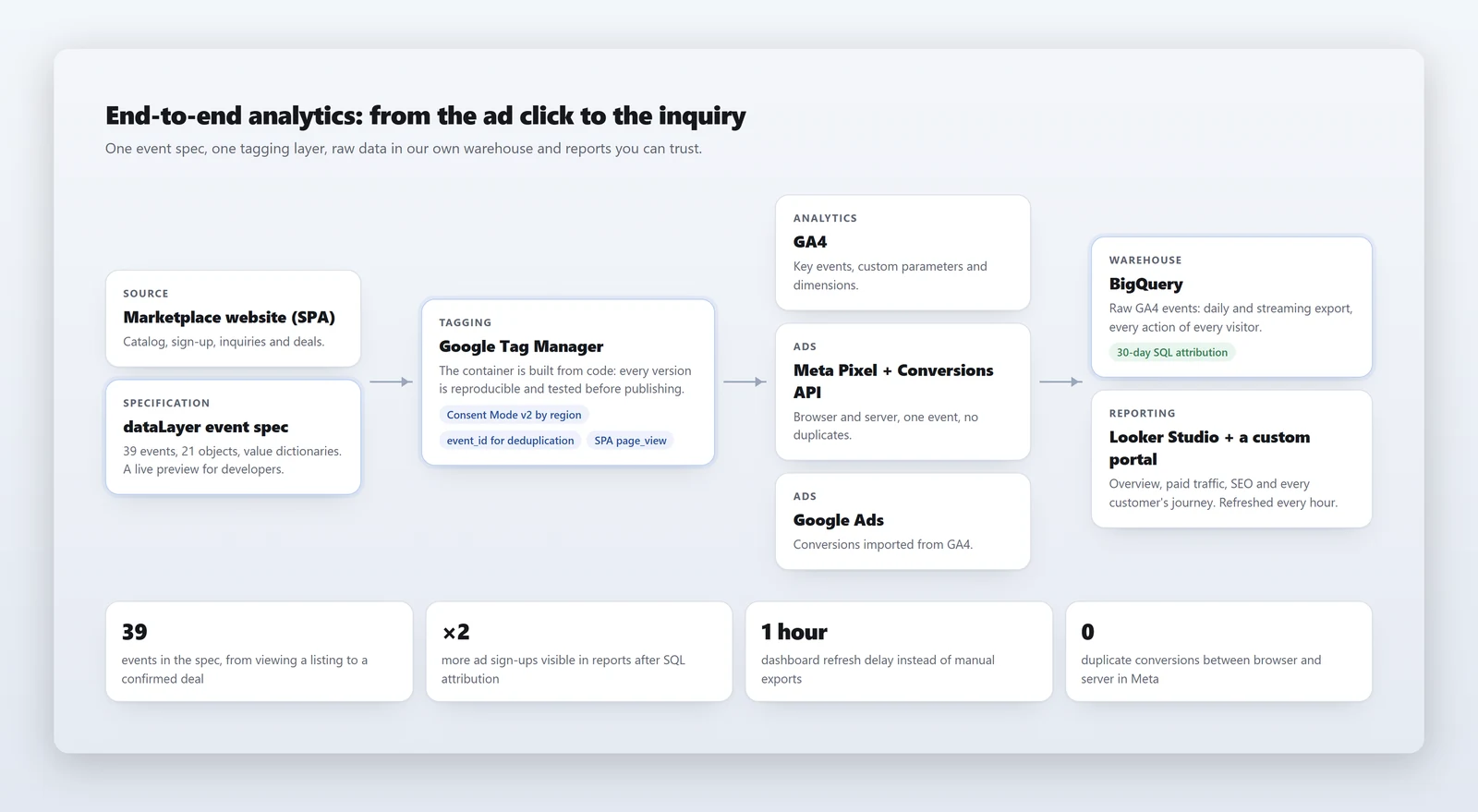
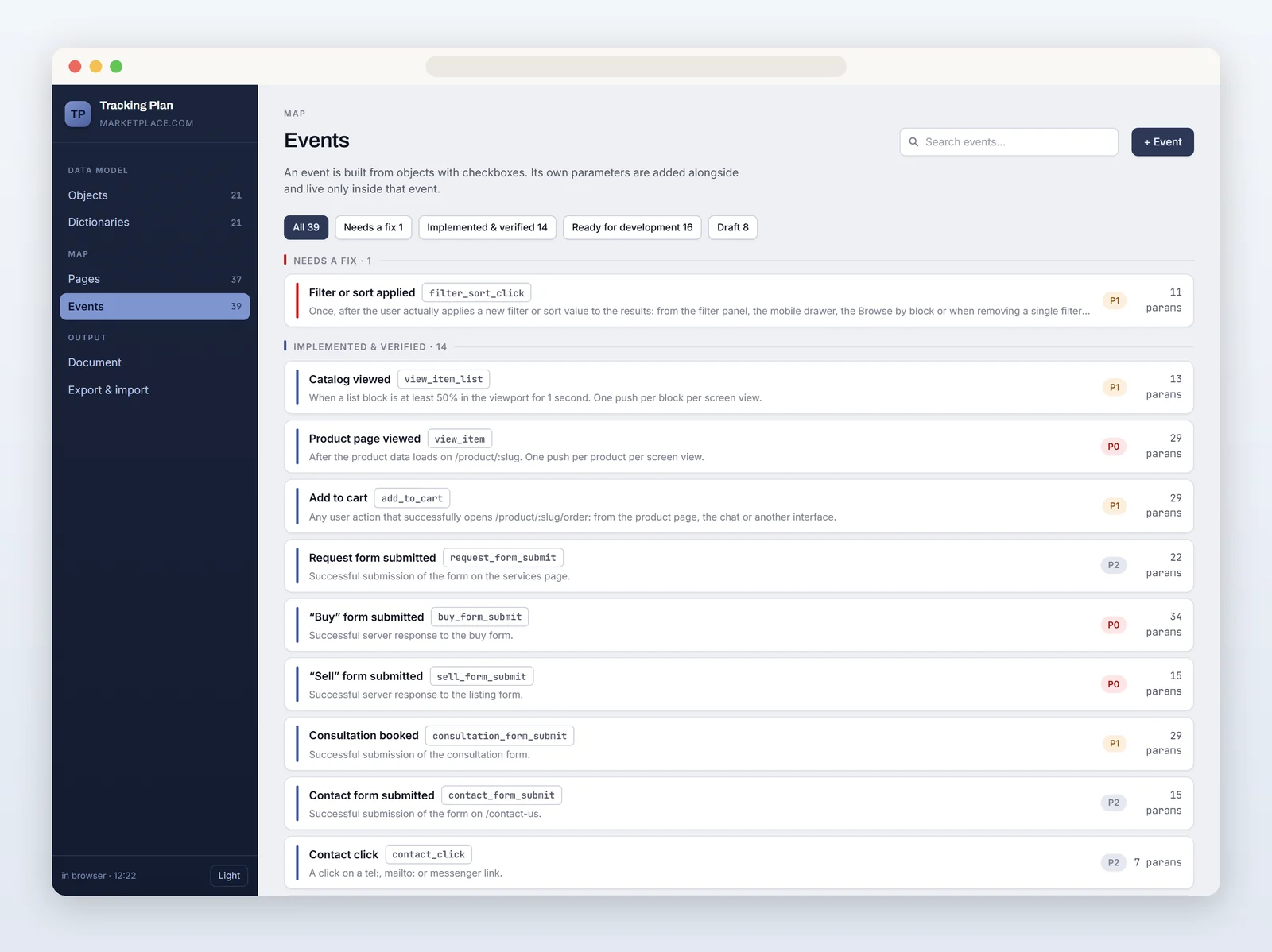
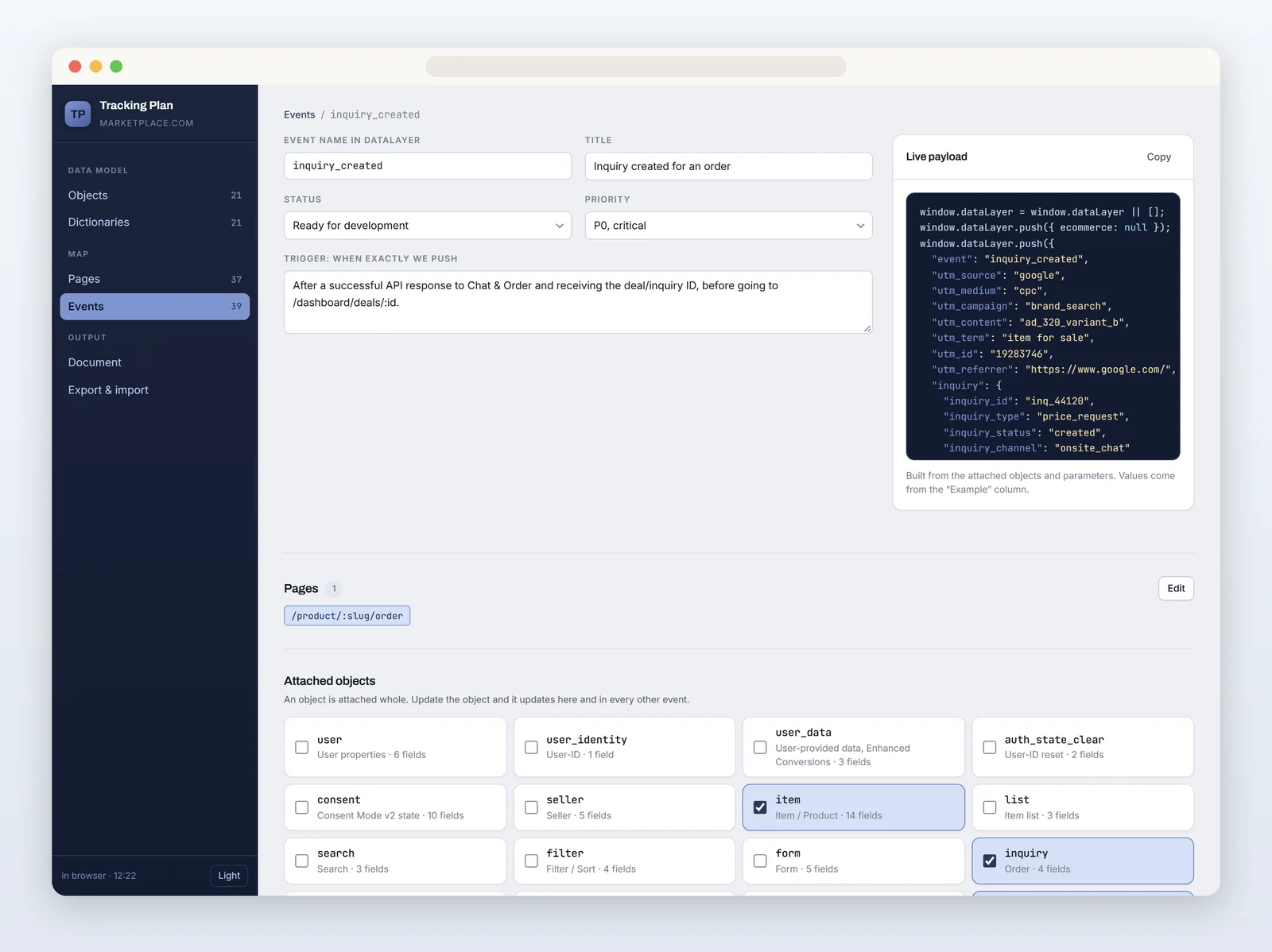
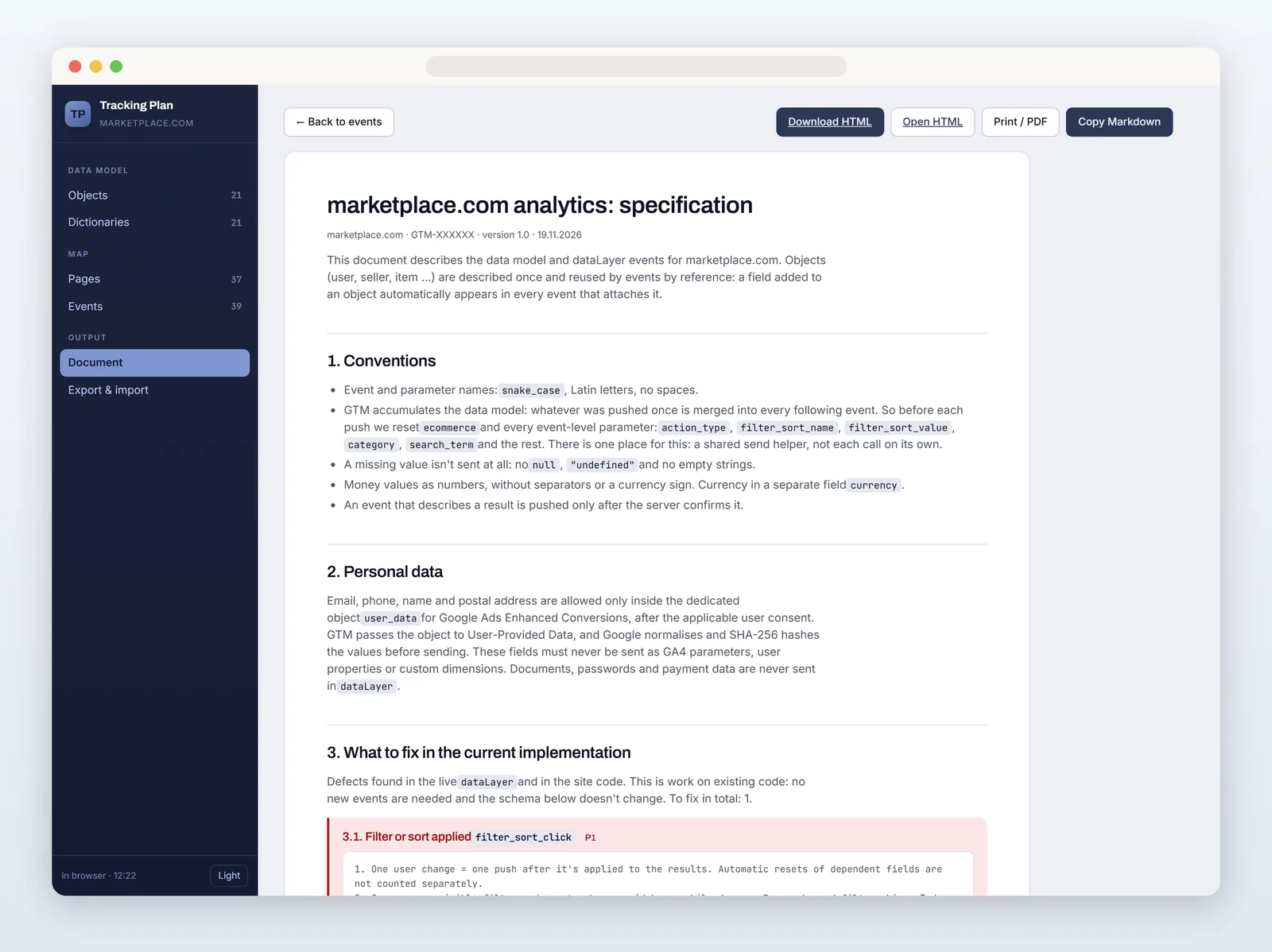
- An event specification. Built in my own tracking-plan tool: 39 events, 21 reusable objects (user, listing, seller, inquiry), value dictionaries and a live code preview for developers. Every event goes from draft to "implemented and verified".
- Google Tag Manager as code. The container is built by a script, every version is reproducible and tested on the live site before publishing.
- GA4: funnel key events, custom parameters and dimensions, correct page tracking inside the single-page app.
- Meta Pixel + Conversions API. Events go from both the browser and the server with one ID, so they're never double counted.
- Google Ads takes its conversions from GA4.
- Cookie consent by region. The strict mode applies only where the law requires it (EU, UK, California and others). Before, over 40% of page views in the key market never reached analytics.
5. BigQuery and custom dashboards
Standard GA4 reports lost the source of some sign-ups: a person tapped an ad in a social app's in-app browser, then opened the confirmation email in their mail app, and analytics saw a new visitor with no source. Plus visitors who declined cookies.
- Raw GA4 events exported to BigQuery: daily and streaming.
- SQL attribution of our own: a conversion is credited to ads if the same person clicked an ad within 30 days. One person's browsers are joined at email confirmation. Reports now show 2× more sign-ups from ads, matching the ad account.
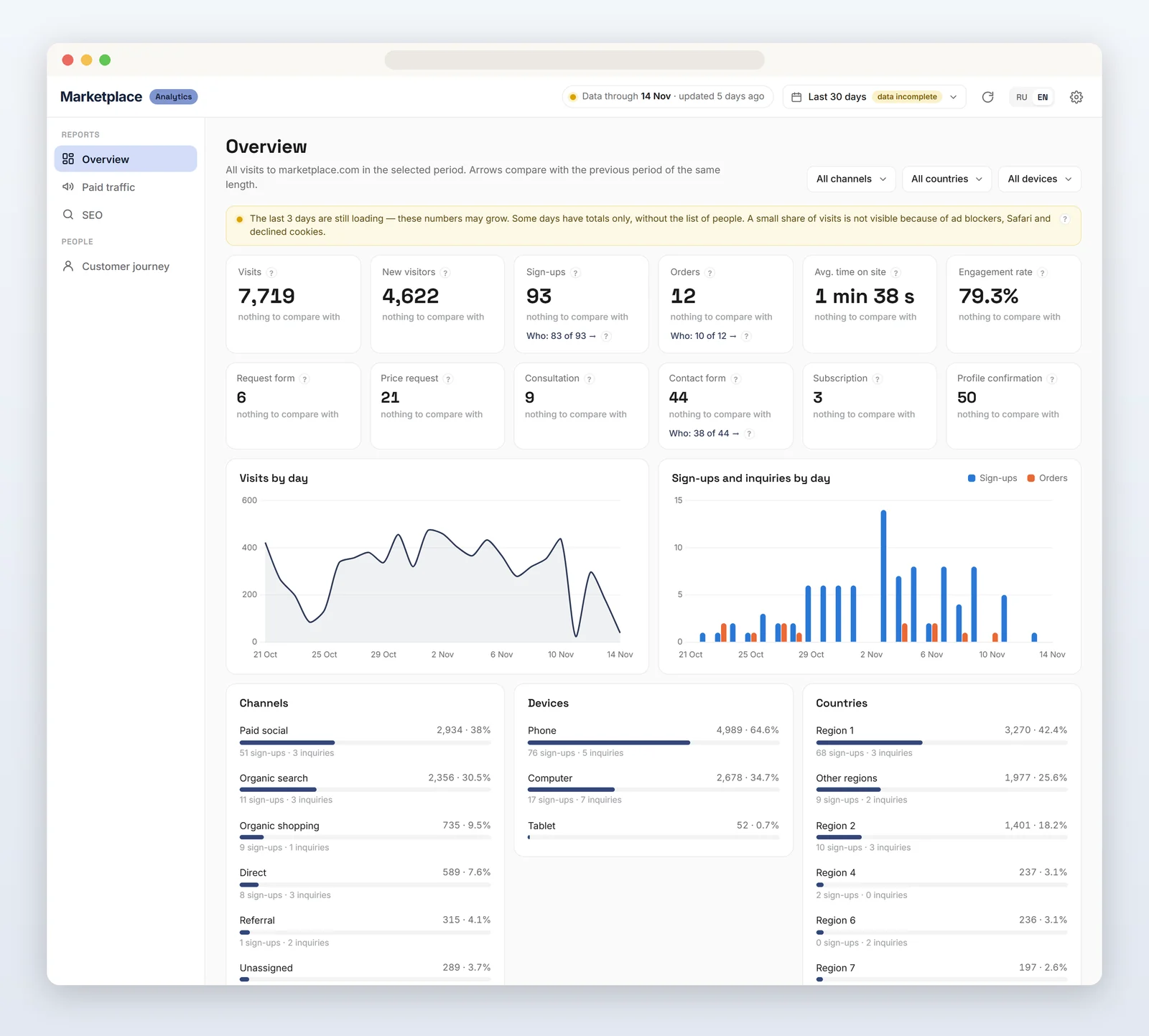
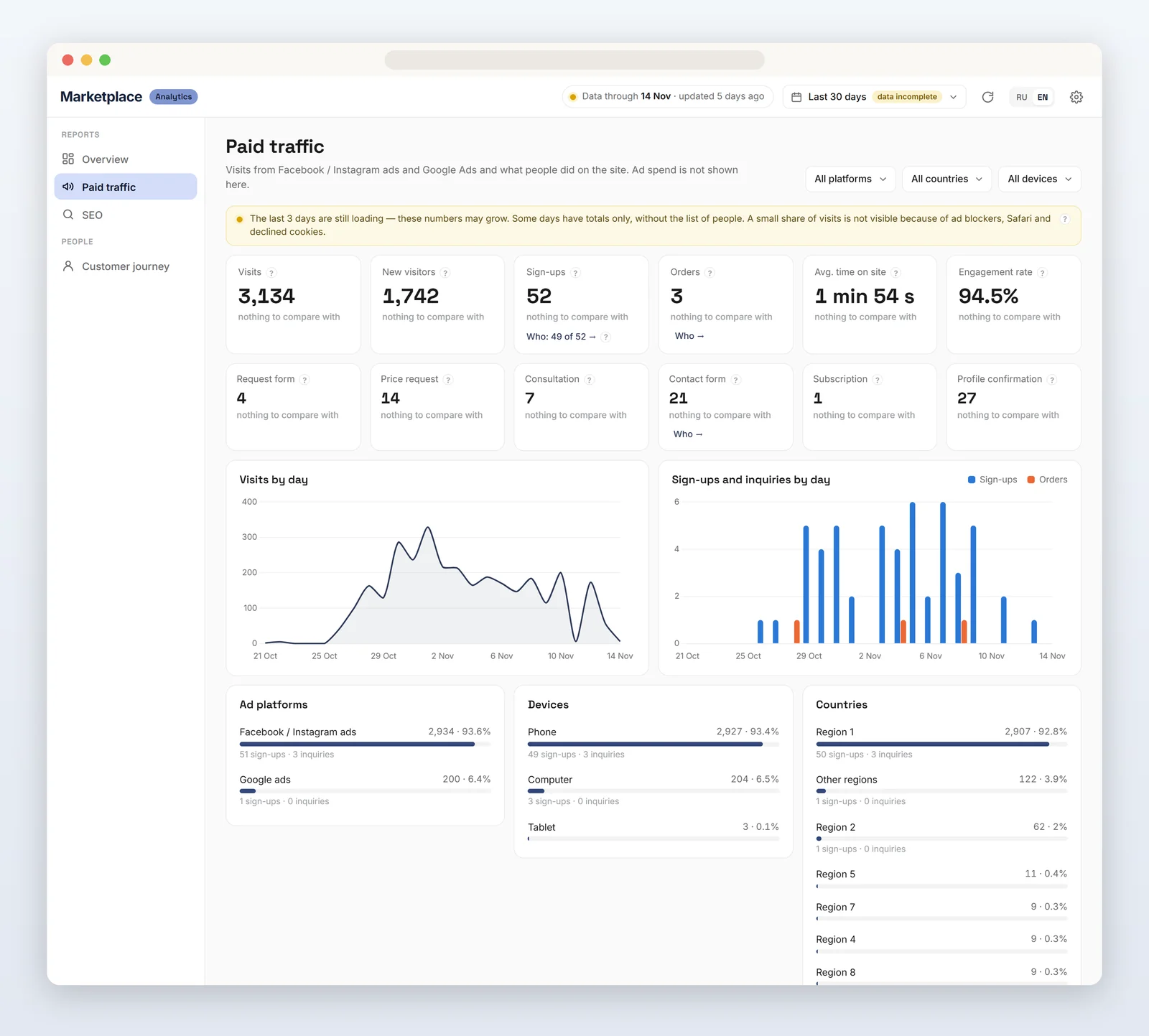
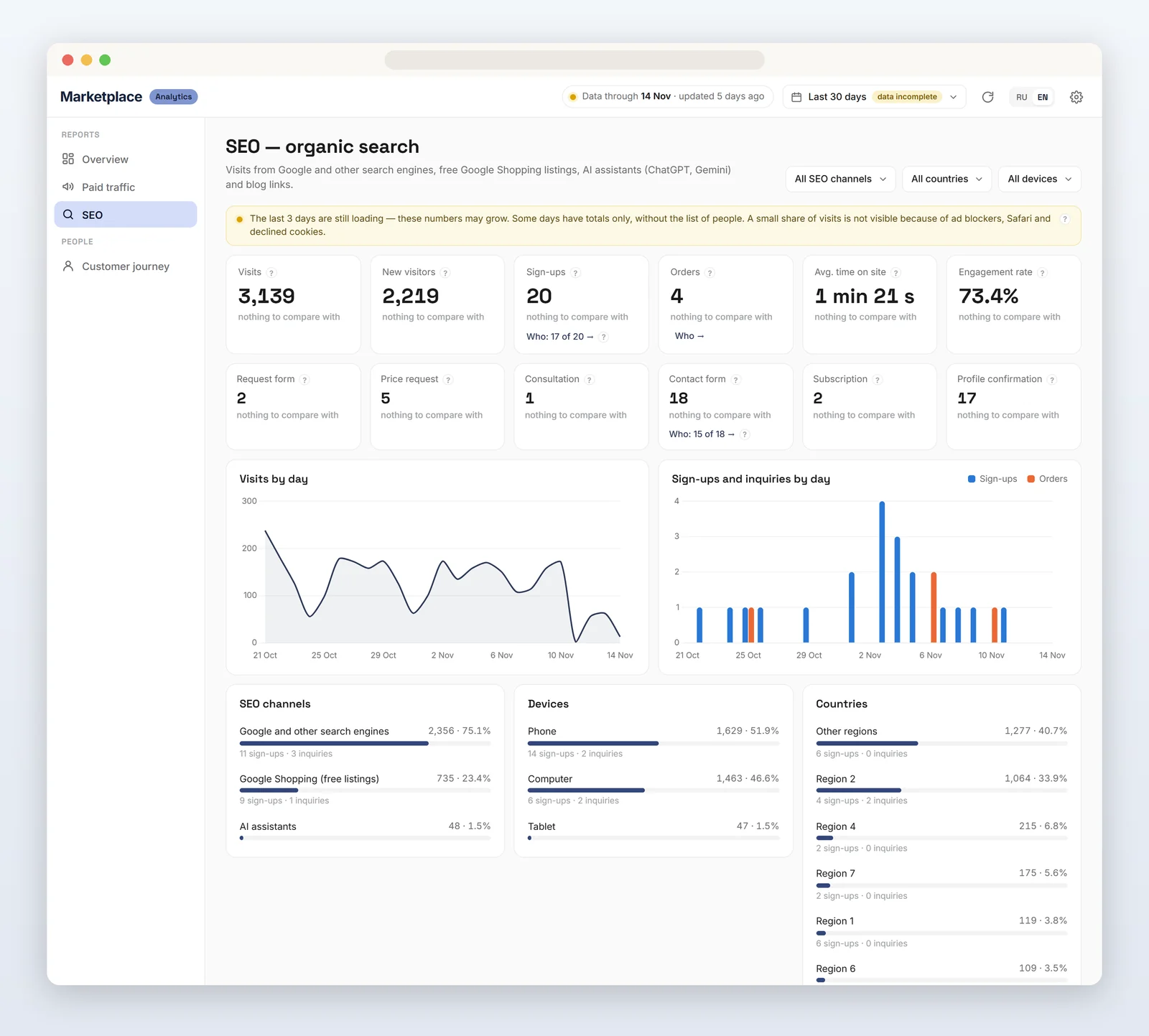
- Looker Studio: overview, paid traffic, SEO, with conversion cards built on BigQuery queries.
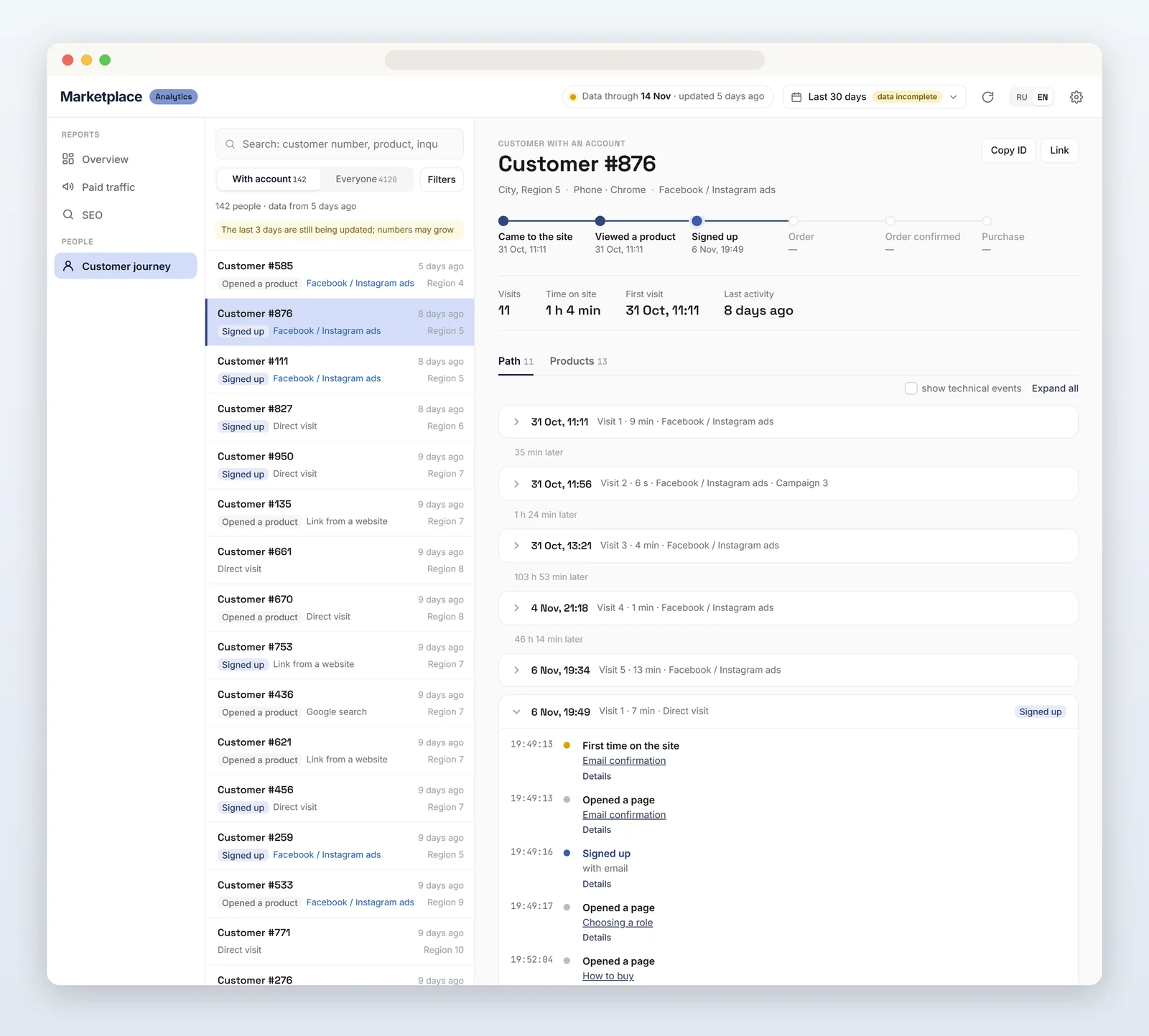
- A custom analytics portal: overview, paid traffic, SEO and every customer's journey. Refreshes itself every hour, in Russian and English, readable without a technical background.
6. Funnel audit
Once analytics worked, it showed where buyers were lost, and that changed product decisions:
- An extra mandatory step before the inquiry. People signed up but stopped there. I proposed moving it closer to payment.
- Over a third of on-site searches found nothing: typos, synonyms, a different word order. I collected every query and rules to fix them.
- Site forms bring leads too. They're now in every report alongside sign-ups.
Summary
- 3M+ impressions and 62,000+ visits from ads in four markets.
- 8,500+ equipment listing views by people from ads.
- Analytics you can trust: every event is specified, verified and consistent across GA4, Meta and BigQuery.
- A custom portal that shows every buyer's path, not just totals.
The work continues: optimising ads for listing inquiries, funnel changes from the audit, and one analytics setup for all of the group's sites.
Want a result like this?
Tell me about your project. I reply within 24 hours.